Skip to main content

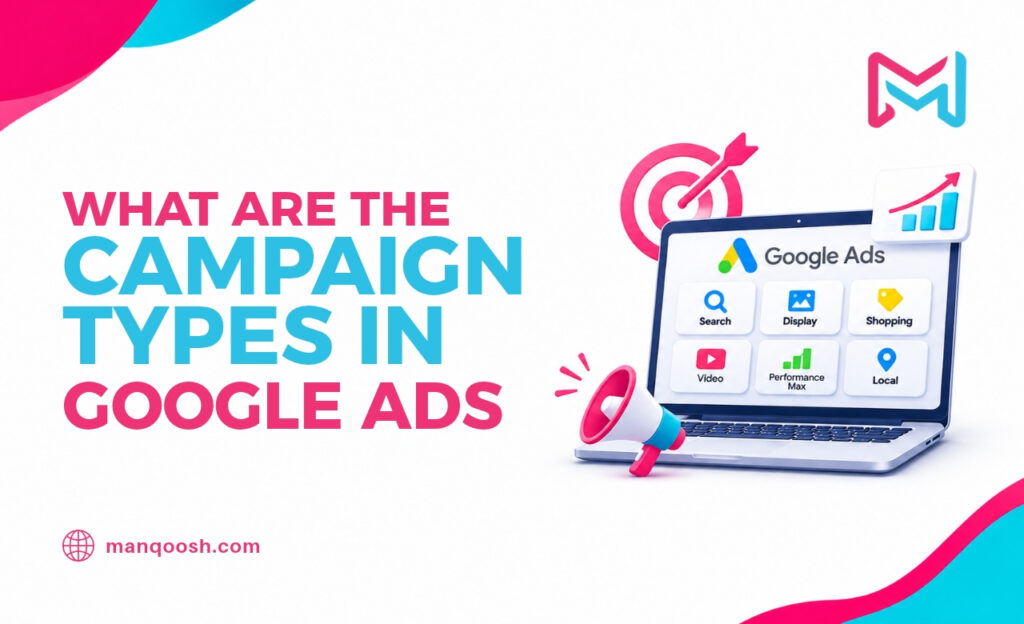
Google Ads is not a single advertising product. It is a collection of different campaign types, each built to reach people in a different place, at a different moment, with a different kind of message. Some appear when someone types a search; others appear while a person watches a video, scrolls a website, browses a shopping feed, or opens an app. Picking the wrong type is one of the quickest ways to spend money without results, because even a strong ad performs poorly in the wrong place.
The Google Ads campaign type is the first real decision in any account, and it is also where many businesses go wrong. Each type has its own technical setup, its own rules, and its own ways of wasting budget, so guessing and learning through trial and error becomes an expensive habit. Here is what each campaign type does, who it suits, and where the real complexity sits.
1. Search Campaigns
Search campaigns show text ads on Google’s results when someone types a query related to your chosen keywords. They are the most familiar type because the audience is already looking for what you offer, which makes search the closest thing to advertising at the exact moment of need. It is usually the first campaign that service businesses and local companies run.
Behind that simplicity sits a surprising amount of technical work. Keyword structure, match types, negative keyword lists, ad strength, bidding strategy, and landing page relevance all interact, and small mistakes in any of them quietly pull a campaign towards irrelevant searches and wasted spend.
- Strong for calls, enquiries, and bookings
- Best for service businesses and local companies
- Competitive keywords can make clicks expensive
- Results depend on dozens of settings working together
Explore our Google Ads Management Services in Dubai, UAE
2. Performance Max Campaigns
Performance Max is Google’s automation-driven campaign type. Instead of choosing one place to advertise, you supply creative assets and audience signals, and Google assembles ads that run across Search, YouTube, Display, Discover, Gmail, and Maps from a single campaign. It can find customers that a single-channel campaign would miss.
The catch is control. Google shows limited detail about where ads appeared, and the system learns entirely from the conversion data it receives. If tracking is inaccurate or goals are vague, it optimises towards the wrong outcomes and spends accordingly. It also favours easy conversions, which are not always the valuable ones.
Getting good results depends on how asset groups are built, how audience signals are shaped, what exclusions are applied, and how results are read afterwards. This is exactly the kind of campaign that looks easy to launch and difficult to run well.
3. Shopping Campaigns
Shopping campaigns are built for businesses that sell physical products online. They show product listings with an image, a title, a price, and the store name, drawn from a product feed instead of keywords you write. Shoppers see the product and price before clicking, so visitors tend to be closer to buying.
The feed is where the difficulty lies. Product data must meet strict requirements, and errors can cause listings to be disapproved or shown for the wrong searches without any obvious warning.
- Designed for online stores
- Shows images and prices before the click
- Depends entirely on a clean, structured product feed
4. Display Campaigns
Display campaigns show visual ads across millions of websites, apps, and Google properties. Instead of catching people who are searching, they place your brand in front of people while they browse, which makes display an awareness and reminder tool rather than a direct response one. One of its most valuable uses is remarketing, showing ads to people who visited your site but did not act.
Display is inexpensive per impression, but it is also where budgets leak fastest. Placements, audiences, and exclusions need careful control; otherwise, ads appear on low-quality sites and attract accidental clicks. It works best as a supporting channel alongside others, not on its own.
Get Marketing Consultation From Our Experts (UAE)
5. Video Campaigns
Video campaigns place your ads on YouTube and partner sites that show video. YouTube gives access to a very large and engaged audience, and video lets a business tell a story, demonstrate a product, and build recognition in a way static ads cannot.
Success depends heavily on audience targeting, ad format selection, and creative that earns attention in the first few seconds, so technical setup and creative judgement have to work together.
- Ideal for brand awareness and recall
- Useful for products that need demonstration
- Works well for retargeting past visitors
- Can support direct response with the right setup
6. Demand Generation Campaigns
Demand Generation, often called Demand Gen, creates interest among people who are not yet searching. It replaced the older Discovery campaigns and shows visually rich ads across YouTube, Discover, and Gmail, reaching people while they enjoy content rather than at the moment they search.
It suits visual brands such as fashion, travel, lifestyle, and hospitality, where storytelling matters. Google uses audience behaviour to find people who resemble existing customers, which makes the quality of your customer data and conversion tracking very important.
Because it reaches people earlier in their decision-making, results are measured differently from search. Engaged visits and assisted conversions often come before direct sales, so reading the numbers correctly takes experience.
7. App Campaigns
App campaigns promote a mobile app and drive installs or actions inside it. Google automatically creates and tests ads across Search, the Play Store, YouTube, and partner networks, based on the text, images, videos, and goal you provide.
The technical side is demanding. Accurate tracking of in-app events is essential, because without it, a campaign may deliver many installs from people who never use the app again.
- Only relevant for businesses with a mobile app
- Works for installs, in-app actions, and re-engagement
- Needs proper event tracking to find valuable users
8. Smart Campaigns
Smart campaigns are a simplified type for small businesses that want to advertise without learning the full complexity of Google Ads. Setup is short, and Google chooses keywords, writes ad variations, and decides where to show them based on a few details about your business.
The trade-off is control. You have limited ability to choose exact keywords, block irrelevant searches, or read detailed performance data, so many businesses outgrow Smart campaigns and need a more tailored setup as they grow.
Manqoosh Marketing offers both marketing consultation and complete Google Ads management, so you can choose the right campaign types from the start and run them properly. Do not go for trial and error with your budget.
Contact Manqoosh Marketing today, and let’s build a Google Ads strategy that puts the right campaign in front of the right customers.
Talk to Manqoosh Marketing about SEO, Google Ads, social media ads or a new website.

Previous post