


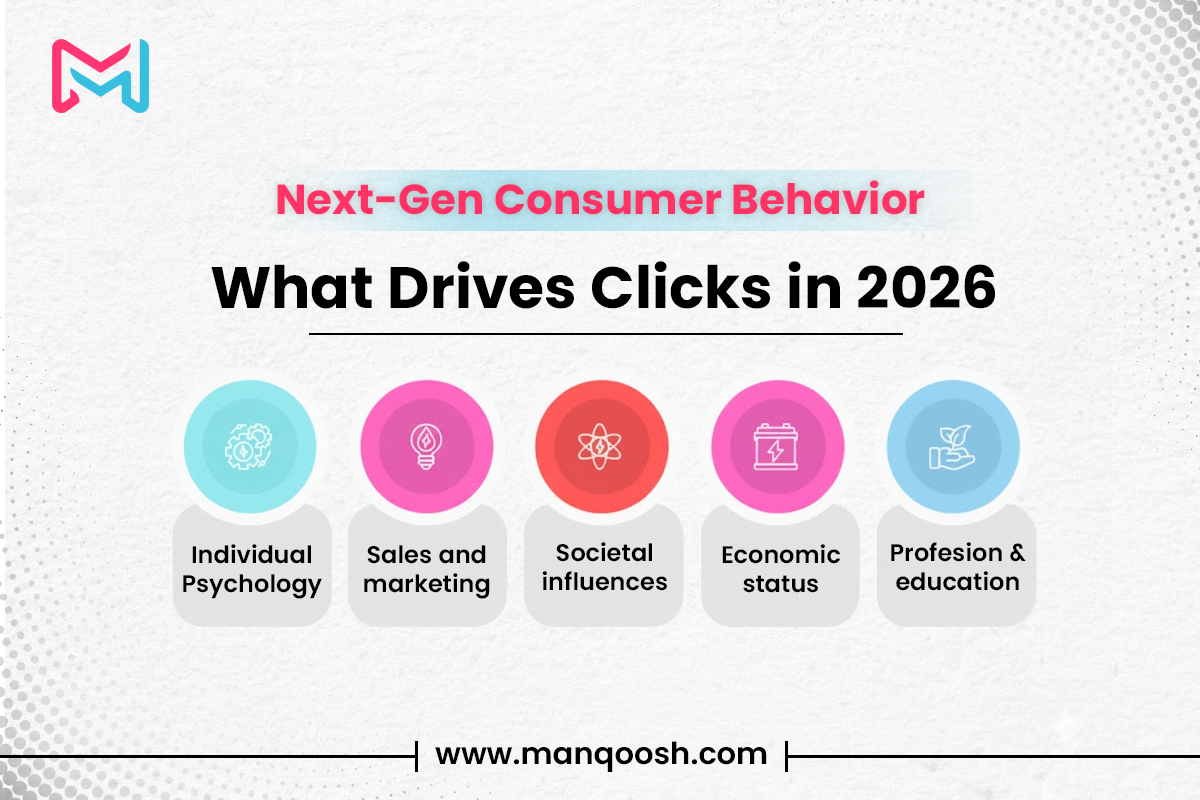
Next-Gen Consumer Behavior: What Drives Clicks in 2026
- digitalmanqoosh
- December 24, 2025
- Uncategorized
- 0 Comments
The digital landscape is evolving quickly than ever, and with it, client behavior is remodeling in ways entrepreneurs ought to understand to stay ahead. By 2026, the drivers behind clicks, engagement, and conversions may be increasingly shaped by a mix of era, psychology, and social dynamics. For agencies like Manqoosh, knowing those traits isn’t always just an aggressive gain—it’s critical for survival.
The rise of Hyper-Personalization
Purchasers these days anticipate greater than expected messaging. By 2026, hyper-personalization will have become the dominant approach to digital interactions. Thanks to AI, machines are learning to know, and with superior analytics, manufacturers can assume desires before clients even articulate them. Personalized pointers, curated content, and adaptive reports will no longer be a luxury—they’ll be anticipated.
Click conduct will increasingly reflect this shift. Customers are much more likely to interact with content that feels tailor-made for them. Whether it’s an Instagram ad that reflects surfing conduct or an email that recommends merchandise primarily based on past purchases, relevance will drive engagement. Entrepreneurs who fail to invest in personalization risk becoming historical noise in an oversaturated digital area.
The Influence of AI-Generated Content
AI is not simply shaping personalization; it’s reworking content creation itself. By 2026, AI-generated movies, photographs, and written content could be commonplace, enabling manufacturers the ability to scale content production without sacrificing quality.
But what drives clicks isn’t always AI on my own—it’s how human clients understand it. Content that resonates emotionally, tells a tale, or entertains is still more likely to transform. Purchasers are becoming savvier and can spot inauthenticity, so mixing AI performance with authentic brand voice can be key. The winners could be people who harness AI to enhance creativity, rather than replace it.
Short-Form, Snackable Content Dominance
The eye economy is most effective in getting greater competitiveness. Studies indicate that by 2026, average attention spans may also be cut back, making brief, snackable content material critical. Motion pictures under 30 seconds, interactive polls, and short-examine blog snippets will seize interest more effectively than long-form content on my own.
Click-through quotes will be heavily inspired by immediacy. Users need instantaneous price—whether it’s entertainment, information, or a technique to solve a problem. Platforms like TikTok, Instagram Reels, and YouTube Shorts exemplify this fashion, and types that adapt to bite-sized storytelling will see better engagement and click-through rates.
The Role of Social Proof and Peer Influence
Customer behavior has always been social; however, peer impact is taking on new dimensions. By 2026, opinions, testimonials, and influencer pointers will continue to be critical; however, authenticity might be paramount. Micro-influencers and actual user testimonies will drive more clicks than polished company campaigns.
Interactive functions such as social proof pop-ups (“1,234 people bought this these days”) and user-generated content campaigns will further inspire engagement. Clients are increasingly seeking reassurance from their peers earlier than clicking, signing up, or making a purchase.
Privacy, Transparency, and Ethical Marketing
With the rise of AI and hyper-concentration comes heightened challenge for privacy. By 2026, ethical advertising and transparent fact practices will directly impact purchaser trust—and clicks. Brands that genuinely discuss how they use statistics and provide customers with control over their online presence will see improved engagement fees.
Conversely, intrusive, misleading, or opaque methods can lead to customer backlash. Moral marketing will no longer be optional; it will force the behaviour that marketers crave.
Omnichannel Experience: Beyond Single Platforms
Consumers do not stay on a single platform—they pass seamlessly between apps, gadgets, and online/offline touchpoints. By 2026, incorporated omnichannel studies will drive clicks greater than isolated campaigns.
For example, a consumer might also discover a product on social media, research it on a website, and finalize the purchase on a mobile app. Every touchpoint has to feel cohesive and personalized. Brands that orchestrate this journey successfully will capture interest, inspire clicks, and build lasting relationships.
Predicting The Future of Clicks
Looking ahead, the following era of clients will click primarily based on three major drivers: relevance, authenticity, and enjoyment. Personalization powered by AI will capture attention, but emotional resonance and ethical transparency will seal the engagement. Snackable content, social proof, and seamless omnichannel reports will outline the new standard.
For Manqoosh and other forward-thinking brands, the assignment is clear: evolve with the purchaser, embody generational thoughts, and craft experiences that feel non-public, proper, and meaningful. Folks who grasp these elements will no longer just drive clicks in 2026—they will cultivate loyalty, advocacy, and long-term achievement.
Related Posts