



AI Overviews SEO Strategy: How to Get Your Brand Cited When Google Answers Before the Click
- Manqoosh Seo
- July 12, 2026
- Blog
- 0 Comments
Search behavior changed the moment Google started answering questions directly on the results page instead of just linking to ten blue links. AI Overviews now sit above traditional organic results for a huge share of queries, and for many searchers, that summary is the only thing they read. If your content isn’t part of that summary, you’re invisible for that search, no matter how well you used to rank.
This shift has forced marketers and business owners in Dubai and across the UAE to rethink what “ranking on Google” even means. Getting into position one no longer guarantees clicks. Getting cited inside the AI Overview does. This article breaks down what AI Overviews actually are, how they choose sources, and the specific strategy you need to earn a spot in them.
Check out our SEO Service in Dubai, UAE
What Are AI Overviews and Why They Matter Now
AI Overviews are Google’s AI-generated summaries that appear at the top of search results for many informational and even some commercial queries. Instead of scanning multiple pages, users get a synthesized answer built from several sources, often with citation links pointing to the pages that supplied the information.
The impact on organic traffic has been significant. Studies and case data across industries show click-through rates on traditional organic listings drop noticeably when an AI Overview appears above them, because a portion of searchers get their answer without scrolling further. For businesses that rely on organic search for leads, this makes visibility inside the AI Overview itself a new, non-negotiable ranking goal, not just a nice-to-have.
How AI Overviews Actually Pick Sources
Unlike a simple ranking algorithm, AI Overviews work through a retrieval and synthesis process. Google’s system pulls information from a set of high-quality, relevant pages, then uses a language model to summarize and stitch that information into a coherent answer.
A few things matter here that differ from classic SEO:
- Pages don’t need to rank number one to be cited. Sources cited in AI Overviews are frequently pulled from positions 3 through 10, sometimes even further down, as long as the content answers the query clearly and directly.
- The system favors content that already demonstrates topical depth and trustworthiness, not just keyword matching.
- Multiple sources can be cited for a single overview, which means there’s more than one seat at the table, but also more competition for attention within the summary itself.
- Content freshness plays a bigger role than before, especially for queries tied to prices, trends, regulations, or anything time-sensitive.
Understanding this retrieval logic is the foundation of any AI Overview strategy. You’re not just trying to beat competitors for a ranking spot. You’re trying to be the clearest, most citable answer to a specific question.
Why Traditional SEO Alone Isn’t Enough Anymore
Classic SEO tactics like keyword placement, meta tags, and backlink building still matter, but they were built for a system that ranked pages, not one that extracts and rewrites answers. A page can rank well and still get skipped by the AI Overview if the content doesn’t present information in a format the model can easily lift and summarize.
This is the core mindset shift businesses need to make. The question is no longer only “how do I rank for this keyword,” but “how do I make my answer the easiest one for an AI system to extract, trust, and quote.”
Core Pillars of an AI Overview SEO Strategy
Below are the core pillars of AI overview seo startegy that can help you:
1. Structure Content for Extraction
AI systems pull information more reliably from content that is already organized clearly. Long, unbroken paragraphs are harder to summarize accurately than content with a logical flow.
Practical changes that help:
- Answer the core question in the first two or three sentences under each heading, before adding supporting detail.
- Use descriptive H2 and H3 headings that mirror how people actually phrase questions.
- Break down processes, comparisons, and lists into bullet points or numbered steps rather than dense prose.
- Include a short definition or summary near the top of the page for “what is” style queries.
This isn’t about writing shorter content. It’s about writing content where the key answer isn’t buried.
2. Build Real E-E-A-T Signals
Experience, Expertise, Authoritativeness, and Trustworthiness have always mattered for SEO, but they carry extra weight for AI Overviews because the system is deciding which sources are reliable enough to summarize and attach a citation link to.
This means author bios with real credentials, original case studies, first-hand data, and transparent sourcing all carry more influence than generic, unattributed content. A blog post written from direct experience running campaigns or serving clients in a specific market will consistently outperform a rewritten summary of what’s already ranking.
3. Use Structured Data and Schema Markup
Schema markup helps search engines understand exactly what your content is about, which product, service, FAQ, or process it describes. FAQ schema, HowTo schema, and Article schema all make it easier for Google’s systems to parse your page accurately and extract the right pieces for a summary.
This is a technical layer many businesses skip, and it’s one of the more efficient investments in an AI Overview strategy because it directly feeds machine-readable context into the retrieval process.
4. Prioritize Original Data and Unique Insights
Generic content that repeats what’s already on page one rarely gets cited, because the model already has that information from a dozen other sources. What stands out is original research, proprietary data, unique case studies, or a perspective that isn’t duplicated elsewhere.
For a UAE business, this could mean publishing localized data such as regional pricing benchmarks, market trends specific to Dubai or the wider Gulf, or performance results from real campaigns. Original numbers and specific, verifiable claims are far more citable than broad statements.
5. Build Topical Authority, Not Just Individual Pages
AI Overviews tend to favor domains that show consistent depth on a subject rather than a single well-optimized page sitting on an otherwise thin site. Building content clusters around a core topic, with a central pillar page and supporting articles covering subtopics, signals authority at the site level.
This is where internal linking, consistent publishing, and a clear content structure work together. A site with fifteen strong, interlinked pages on a topic will generally outperform a site with one isolated article, even if that single article is well written.
6. Don’t Neglect Technical SEO Fundamentals
None of the above matters if Google can’t crawl, render, and index your content efficiently. Fast load times, mobile usability, clean site architecture, and proper indexing remain the baseline requirements. AI Overviews still depend on the same crawling and indexing infrastructure as traditional search, so technical debt on a site quietly limits AI visibility as much as it limits standard rankings.
7. Expand Brand Presence Beyond Your Own Website
AI Overviews increasingly reference information from a mix of sources: review platforms, forums, industry publications, and social content, not just brand-owned pages. Being mentioned and discussed accurately across the web, sometimes referred to as digital PR or brand mention building, increases the chances that your business gets pulled into an AI-generated summary even when the citation points elsewhere.
This includes:
- Getting featured in industry roundups, guest posts, and credible publications
- Encouraging genuine reviews and discussions on platforms Google trusts
- Maintaining consistent, accurate business information (NAP data, service descriptions) across directories
A Practical Checklist for Optimizing Existing Content
If you already have published content and want to improve its chances of being surfaced in AI Overviews, work through this list page by page:
- Does the page answer its target question directly within the first 100 words?
- Are headings phrased as natural questions or clear statements a user would search for?
- Is there at least one section formatted as a list, table, or step sequence?
- Does the page include FAQ schema where relevant questions are answered?
- Is there an author byline with genuine credentials and experience?
- Has the content been updated in the last six to twelve months, especially if it involves pricing, statistics, or regulations?
- Does the page link to and from other related content on your site?
- Would this page still make sense if only the first paragraph under each heading were read?
How to Track AI Overview Visibility
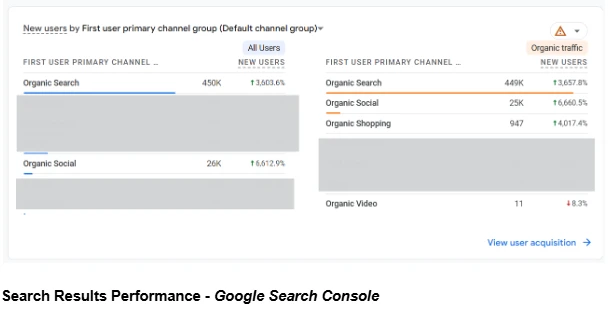
Measuring this is still evolving, but a few methods work well today. Google Search Console now surfaces some data on AI Overview appearances under search results filters, so checking impressions and clicks tied to these features is a good starting point, and comparing that against your standard organic performance can reveal in case AI Overviews are eating into clicks for specific queries.
Manually searching your target queries and logging whether your domain appears as a cited source, tracked over time in a simple spreadsheet, gives a clear before-and-after picture and helps you spot patterns in which types of pages get pulled in and which don’t.
Third-party rank tracking tools have started adding AI Overview and AI Mode tracking features, which can help scale this monitoring across a larger keyword set without manually checking each query, and some now flag whether a competitor’s page is being cited instead of yours, which is useful for prioritizing what to fix first.
Because this feature changes frequently, both in how often it appears and which sources it favors, treat tracking as an ongoing process rather than a one-time audit, and revisit your tracked keyword set every few months as new queries start triggering AI Overviews.
Common Mistakes Businesses Make
- Chasing keyword rankings while ignoring how the content actually reads to an extraction system.
- Publishing thin, generic content that just repeats what’s already available elsewhere online.
- Skipping schema markup entirely, assuming it’s a minor technical detail.
- Treating AI Overview optimization as separate from core SEO, instead of building it into the same content strategy.
- Failing to update older, high-performing pages, letting outdated information cost them their citation.
Getting Your Business Cited, Not Just Ranked
AI Overviews have changed what it means to win a search result. Ranking well is still the starting point, but earning a citation inside the AI-generated answer is the new finish line, and it rewards businesses that structure their content clearly, back it with real expertise, and maintain authority across their entire site rather than a single page.
If you’re seeing traffic plateau or drop despite decent rankings, it’s worth auditing how your content performs in this new search environment before assuming your SEO strategy is broken.
Manqoosh Marketing helps with the best SEO and content optimization services (UAE) and is built around exactly this shift, restructuring content for clarity and extraction, strengthening technical SEO, and building the kind of topical authority that gets businesses cited in AI-driven search results, not just buried in a list of links.
If you want a strategy tailored to your industry and market in the UAE, reach out to our team, and we’ll walk you through where your current content stands and what it needs to compete in AI search.
Related Posts