Skip to main content

Waking up to a traffic graph that has fallen off a cliff is one of the worst feelings for any website owner. One day your pages are ranking comfortably on page one, and the next, half your organic visitors are gone. In most cases, this isn’t bad luck. It’s the result of a Google algorithm update penalty, and it can quietly undo months or even years of SEO work.
The good news is that recovery is possible. Google doesn’t ban sites for life just because an update hurt their rankings. What it usually means is that your site no longer matches the quality, relevance, or trust signals Google is now prioritizing. Once you identify what changed and fix it properly, rankings can and do come back.
Explore our Search Engine Optimization Service in UAE
What Is a Google Algorithm Update Penalty
Google makes thousands of small changes to its ranking systems every year, along with several major “core updates” that can significantly reshape search results. When a site loses visibility after one of these updates, people often call it a penalty, but there are actually two different situations to understand.
Manual Actions
A manual action happens when a real person on Google’s Search Quality team reviews your site and decides it violates the Webmaster Guidelines. This could be due to spammy backlinks, thin content, cloaking, or other manipulative tactics. If this applies to you, it will appear directly in Google Search Console under the “Manual Actions” report.
Algorithmic Drops
Far more common than manual actions, algorithmic drops happen when a broad update changes how Google evaluates content, links, or user experience. No human flags your site individually. Instead, your pages simply score lower against the new criteria. Core updates, helpful content updates, and spam updates are the usual culprits here.
Knowing which one you’re dealing with changes your entire recovery strategy, so this is always the first thing to confirm.
Signs Your Website Has Been Hit by an Algorithm Update
Before assuming the worst, it helps to look for patterns that confirm an update is actually responsible for your traffic loss.
- A sudden, sharp drop in organic traffic that lines up with a known Google update date
- Multiple pages losing rankings at once rather than just one or two
- Keywords that used to rank on page one now sitting on page three or beyond
- No manual action listed in Google Search Console
- Competitors in your niche reporting similar drops around the same time
- Traffic decline that’s specific to organic search, while direct and referral traffic stay stable
If several of these apply to you, you’re very likely dealing with an algorithmic impact rather than a technical bug or seasonal dip.
Common Google Updates That Cause Ranking Drops
Google names its major updates, and each one tends to target a different weakness.
1. Core Updates
These broad updates happen several times a year and reassess how relevant and authoritative content is overall. There’s no single fix for a core update hit because it evaluates your site holistically, including content depth, expertise, and user experience.
2. Helpful Content Updates
This system, now folded into core ranking signals, specifically targets content written primarily to rank rather than to genuinely help readers. Thin blog posts, AI-generated filler, and content that doesn’t reflect real experience are common targets.
3. Spam Updates
These focus on manipulative tactics such as keyword stuffing, doorway pages, scraped content, and expired domain abuse.
4. Link Spam Updates
Aimed squarely at unnatural backlinks, including paid links that pass PageRank without disclosure, link exchanges, and low-quality guest post networks.
Understanding which category matches your traffic drop narrows down exactly where to focus your recovery effort.
Step 1: Confirm the Drop Is Really Penalty Related
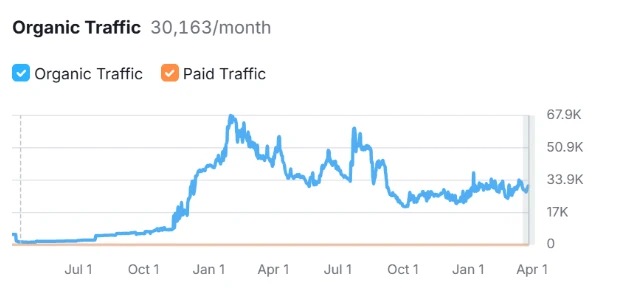
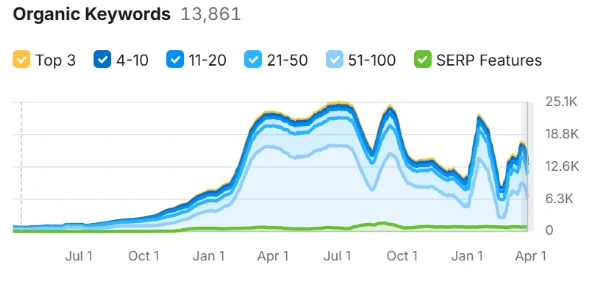
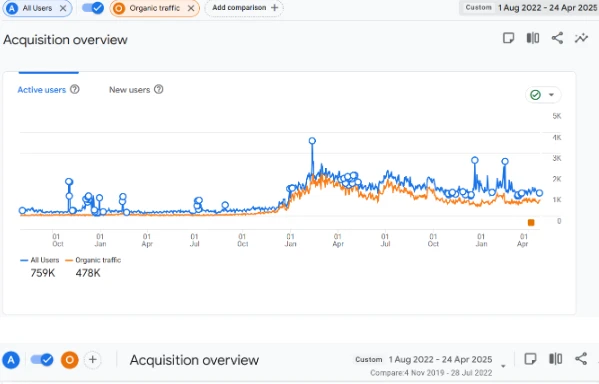
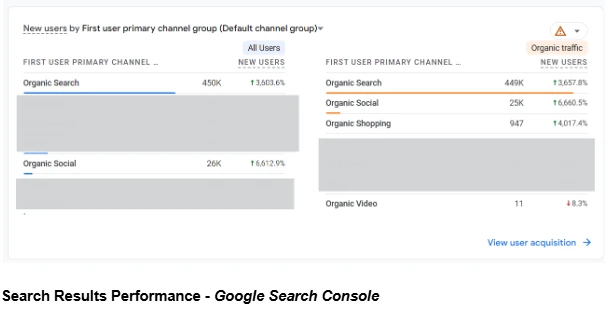
Start in Google Search Console and Google Analytics. Compare your organic traffic and average position over the past 6 to 12 months. Overlay this data against Google’s confirmed update timeline, which is published on Google’s Search Status Dashboard.
If the drop date matches an update rollout window, that’s a strong signal that something changed at the algorithm level. If the drop happened gradually with no clear trigger, it might be a technical issue instead, such as crawl errors or a bad site migration.
If it happened right after a redesign, CMS migration, or URL structure change, rule out technical causes before blaming an update. This step alone saves weeks of chasing the wrong problem.
Step 2: Identify Which Pages and Keywords Were Affected
Not every page loses visibility equally. Pull a list of your top landing pages before and after the drop, then compare rankings for your priority keywords. Look closely at whether the affected pages are mostly thin, outdated, or duplicate content.
In case they lean heavily on AI-generated text with little original insight; in case they’re product or category pages with weak descriptions; or whether they’re simply older posts that haven’t been touched in years. Patterns here usually point directly to the root cause, whether that’s a content quality issue, a technical gap, or a link problem.
Step 3: Audit and Improve Your Content Quality
If the affected pages share weak, generic, or outdated content, this is where most of your recovery work needs to happen. Google’s quality raters and ranking systems increasingly favor content that demonstrates real experience, not just information copied or rewritten from other sources.
Rewrite thin pages to add genuine depth, examples, and original insight. Remove or merge pages that don’t serve a clear search intent, and update statistics, screenshots, and examples so content reflects current information.
Add author bios and credentials so it’s clear who actually wrote the content, cut filler sentences and generic introductions that add word count without value, and make sure every page actually answers the question a searcher typed into Google.
Consolidating several weak pages into one strong, comprehensive resource often performs better than keeping many mediocre ones live.
Step 4: Check for Technical SEO Issues
Algorithm updates often expose technical weaknesses that were already hurting your site quietly in the background. Confirm important pages are still indexable and not accidentally blocked by robots.txt or noindex tags, and check Core Web Vitals scores for slow loading times or layout shifts.
Fix broken internal links and outdated redirects, and make sure your site is fully mobile-friendly, since Google indexes mobile versions by default. Clean up duplicate content caused by URL parameters or filter pages, and review your XML sitemap to confirm it only includes canonical, indexable URLs.
A technically clean site gives your content the best possible chance once quality improvements go live.
Dominate Search Rankings with Dubai Technical SEO Expert Agency
Step 5: Review Your Backlink Profile
If a spam or link update coincided with your drop, your backlink profile deserves close attention. Export your backlinks from Search Console and a tool like Ahrefs or Semrush, then flag links from irrelevant, low-quality, or clearly spammy domains.
Reach out to webmasters to request removal where possible, and use Google’s disavow tool as a last resort for links you can’t get removed. Stop any paid link building that doesn’t use proper nofollow or sponsored tags.
Backlink cleanup is slower than content fixes, so patience matters here more than anywhere else.
Step 6: Strengthen Your E-E-A-T Signals
Experience, Expertise, Authoritativeness, and Trustworthiness sit at the center of how Google evaluates quality today, especially for topics related to health, finance, and safety. Show real author names, bios, and relevant credentials on every article, and link out to credible, authoritative sources where appropriate.
Add case studies, original data, or first-hand experience wherever possible, keep contact information, business details, and privacy policies clear and accessible, and collect and display genuine reviews or testimonials where relevant.
None of this guarantees recovery on its own, but weak trust signals make it far harder for Google to reward your content, even after quality improvements.
Step 7: Submit a Reconsideration Request If You Have a Manual Action
If Search Console shows a manual action, content and technical fixes alone won’t restore your rankings. You’ll need to fix the violation completely, document what you changed, and submit a reconsideration request through Search Console. Be specific and honest about what caused the issue and what steps you took to resolve it. Vague or rushed requests are usually rejected.
How Long Does Recovery Mostly Take
This is the question every affected website owner asks, and unfortunately there’s no fixed timeline. Manual action reconsideration requests are typically reviewed within a few weeks. Algorithmic recovery is different, since it usually requires the next core update refresh to fully register your improvements, which can take anywhere from a few weeks to a few months.
The sites that recover fastest share one thing in common: they make real, substantial changes rather than surface-level tweaks. Adding a few keywords or tweaking a meta description won’t move the needle. Genuine improvements to content depth, technical health, and trust signals will.
How to Prevent Future Penalties
Recovery is only half the job. Building resilience against future updates matters just as much.
- Prioritize content written for real people with real search intent, not just keyword targets
- Keep technical SEO fundamentals in check with regular audits
- Build backlinks earned through genuine outreach and quality content rather than shortcuts
- Update and refresh older content on a regular schedule instead of leaving it untouched for years
- Monitor Google’s official update announcements, so you’re never caught off guard
A site built around sustainable, quality-first SEO practices rarely gets hit hard by algorithm changes in the first place.
Getting Back on Track
A Google algorithm update penalty feels alarming, but it’s rarely permanent. With a clear diagnosis, honest content improvements, technical cleanup, and a healthy backlink profile, most sites do climb back. What it takes is patience, a methodical approach, and the discipline to fix the actual problem instead of chasing quick tricks.
If your traffic has dropped and you’re not sure where to start, Manqoosh Marketing & Advertising can help. As a Dubai-based digital marketing agency and Google Partner, our SEO team specializes in technical SEO audits, content optimization, and full algorithm penalty recovery for businesses across the UAE.
We dig into your Search Console data, identify exactly what triggered the drop, and build a practical recovery plan that gets your rankings and revenue back where they belong. Reach out to Manqoosh today to book a free SEO audit and take the first step toward reclaiming your search visibility.
Talk to Manqoosh Marketing about SEO, Google Ads, social media ads or a new website.

Previous post